
Hearty Anti-Inflammatory Vegetable Soup
This is the kind of recipe that grows with you. You make it once for practical reasons, and then you keep making it because it becomes part of your life. A pot on the stove. A warm bowl in your hands. A small, steady way of taking care of the people you love—and yourself.
COOKBOOK
10/3/20255 min read
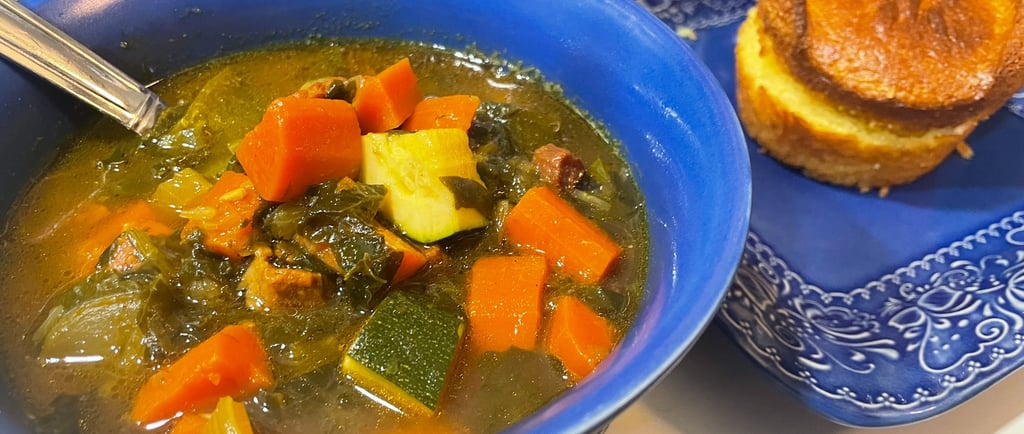
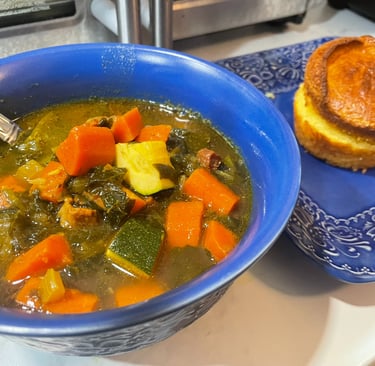
A Pot of Comfort: Hearty Vegetable Soup for Cold Nights and Achy Joints
This recipe yields about 8 generous servings, roughly 1½ to 2 cups per serving, depending on how full you ladle the bowls.
There’s a certain kind of quiet that settles into the house when a big pot of soup is simmering on the stove. The windows fog just a little. The air smells warm and savory. You find yourself wandering back into the kitchen every few minutes, lifting the lid just to check, just to stir, just to breathe it in again.
This soup started as a practical idea, but like most good recipes in our house, it turned into something more.
Over the past few years, I’ve been paying closer attention to the food we cook and why we cook it. My mother is 82, disabled, and living with rheumatoid arthritis. Anyone who has watched someone they love deal with chronic inflammation knows how helpless it can feel. You can’t take the pain away. You can’t fix it with a single meal. But you can try to support the body, meal by meal, with foods that are nourishing, comforting, and made with intention.
At the same time, I’ve started noticing my own joints sending little warning signals—stiffness in the morning, soreness that lingers longer than it used to. Nothing dramatic yet, but enough to make me stop and think about what I want the next few decades to look like.
So I started cooking with a purpose—not in a restrictive, joyless way, but in a grounded, realistic way. I’m not chasing miracle cures or promising that a bowl of soup will fix arthritis. What I am doing is leaning into foods that research has shown may help support the body’s natural response to inflammation, while still making meals that taste good and feel like home.
This hearty vegetable soup is one of those meals.
Cooking With Anti-Inflammatory Ingredients (Without Losing the Joy)
When people hear “anti-inflammatory diet,” they sometimes imagine bland food, tiny portions, or complicated ingredient lists. That hasn’t been our experience at all. In fact, many of the foods commonly associated with anti-inflammatory eating are the same ingredients that have anchored traditional home cooking for generations: vegetables, herbs, garlic, spices, and slow-simmered broths.
This soup is packed with vegetables that show up again and again in research around inflammation:
Carrots, rich in beta-carotene and antioxidants
Broccoli, a cruciferous vegetable known for compounds like sulforaphane
Kale and spinach, dark leafy greens full of vitamins and phytonutrients
Zucchini, a gentle, water-rich vegetable that adds body and nutrition without heaviness
Garlic, long studied for its potential anti-inflammatory and immune-supporting properties
Turmeric, containing curcumin, which has been widely researched for its role in inflammation
Zucchini might not get the same attention as turmeric or leafy greens, but it plays an important role here. It adds volume, fiber, and a subtle sweetness while keeping the soup light and easy to digest—something that matters a lot when cooking for aging bodies or inflamed joints.
Add to that a low-salt chicken stock, a handful of warming herbs and spices, and you get something that feels both nourishing and deeply satisfying.
Just as important as what’s in the pot is how the soup is cooked. Nothing rushed. Nothing complicated. Just chopping, sautéing, simmering, and letting the flavors come together the way they’re meant to.
Soup as Care, Soup as Routine
When my mom’s joints are acting up, her appetite often drops. Heavy or greasy meals can feel overwhelming, but soup almost always works. It’s easy to eat, easy to reheat, and easy on the body. A bowl of this vegetable soup can be a full meal on its own, or paired with something simple like bread for dipping.
The zucchini helps here too. It softens beautifully in the broth without turning mushy, making each spoonful feel hearty but not dense. For someone dealing with pain, stiffness, or fatigue, that balance matters more than most people realize.
For me, making this soup has become part of a rhythm. Big pot on Sunday. Containers lined up on the counter. A few in the fridge, a few in the freezer. It’s comfort knowing that when one of us is tired, sore, or just worn down by the day, something good is already waiting.
And while this recipe was born out of health concerns, I want to be clear about something:
This Soup Isn’t Just for an Anti-Inflammatory Diet
You don’t need joint pain, arthritis, or a specific health goal to enjoy this soup. It’s hearty. It’s flavorful. It’s the kind of meal that makes sense on cool, crisp late fall evenings and deep winter nights when the daylight disappears too early and you want something warm and grounding.
It’s the soup you make when the wind is rattling the windows. When you’ve been outside too long. When everyone’s home and hungry at different times. When you want dinner to feel steady and reliable.
The mix of vegetables—carrots, broccoli, zucchini, kale, and spinach—creates a soup that feels abundant and colorful, not “diet food.” Each vegetable brings something different to the pot, and together they create a broth that feels both light and filling.
And if you’re anything like us, it’s even better with something freshly baked on the side. This soup pairs beautifully with homemade dinner rolls made from our master bread recipe, or a slice of scratch-made honey cornbread—the slightly sweet crumb against the savory broth is hard to beat.
Flavor First, Always
One of my non-negotiables with any “health-focused” recipe is that it has to taste good. No one sticks with food they don’t enjoy, and no one should feel punished at the dinner table.
This soup builds flavor in layers:
Gently sautéed onions, carrots, celery, and zucchini for natural sweetness
Garlic and turmeric bloomed in olive oil to deepen their flavor
Herbs like thyme and bay leaf for warmth
A long enough simmer to let the vegetables soften and the broth turn rich
The greens go in toward the end so they stay vibrant and fresh, not dull and overcooked. The zucchini is added earlier, giving it time to soften and meld into the broth without disappearing entirely. The result is a soup that’s colorful, aromatic, and deeply comforting.
A Note on Expectations
I want to say this plainly, because it matters: this soup is not a cure. It won’t replace medication, physical therapy, or medical care. But it can be part of a supportive, nourishing approach to eating—one that respects both science and the realities of everyday life.
Food is one tool. A powerful one, but still just one piece of the puzzle.
And sometimes, the most important thing a meal does is bring warmth, ease, and a sense of being cared for. That counts too.
Contact
Get in touch for questions or stories
hello@fireironandspice.com
© 2025.Vardar, LLC. All Rights Reserved.
A SkaldLight Creative Production.
LEGAL
Join Us
Subscribe to our page for new homestead updates and recipes, as well as my free gift to you: a downloadable PDF of "My 5 Favorite Sauces for the Grill"

