
The Perfect Pico de Gallo
Fresh, bright, and just a little addictive — this isn’t your sad, watery store-bought Pico. This is the real deal, shaped by growing up on the West Texas border where Pico de Gallo wasn’t a garnish, it was a way of life. Juicy tomatoes, zesty lime, just enough heat, and the kind of freshness that makes you keep “taste testing” straight from the bowl. Simple, honest, and dangerously snackable — fair warning, the chips won’t stand a chance.
COOKBOOK
6/20/20255 min read
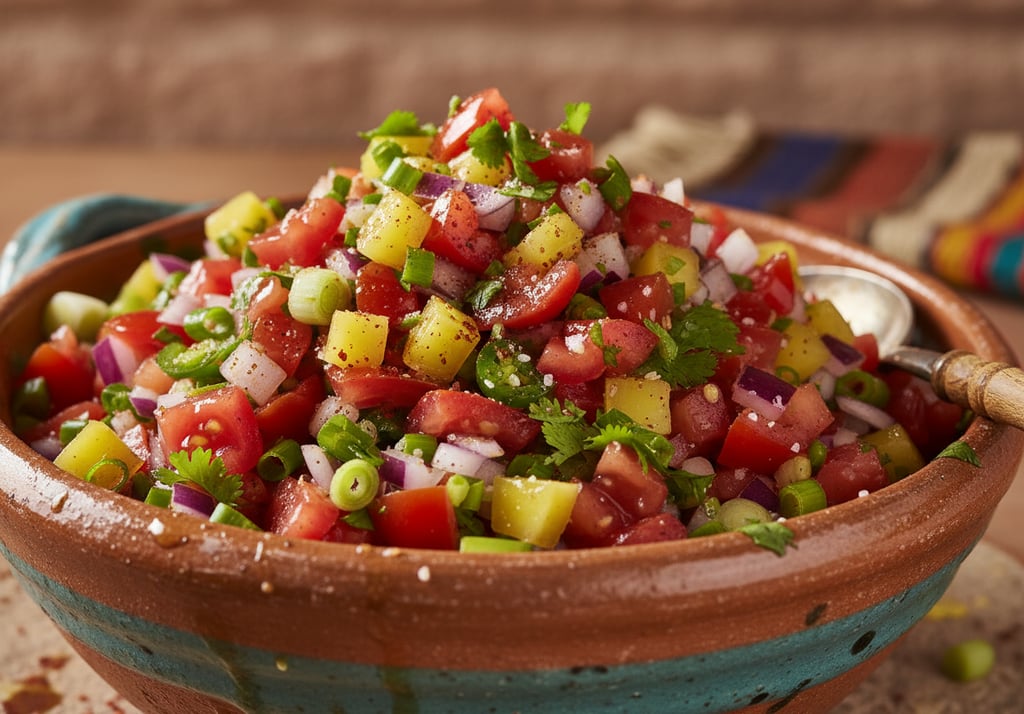
The Perfect Pico de Gallo
There are some recipes that you don’t just learn — you absorb them. They settle into your bones, into your hands, into the way you instinctively reach for a knife and cutting board without thinking twice. Pico de Gallo is one of those recipes for me.
I grew up on the border in West Texas, where the line between cultures blurred in the best possible way. English and Spanish bounced back and forth in grocery store aisles. Family recipes were shared as casually as weather updates. And fresh pico de gallo wasn’t a “recipe” so much as a fact of life. It was just there — on the table, in the fridge, spooned over everything from breakfast eggs to grilled meat pulled straight off a backyard fire.
You didn’t ask if there was Pico. You asked who made it.
In West Texas, especially along the border, Pico de Gallo isn’t an afterthought or a garnish. It’s the heartbeat of the meal. It’s the first thing set down on the table and usually the first thing to disappear. Everyone has an opinion about it, everyone tweaks it just slightly, and everyone swears their version is the right one.
This is mine — shaped by where I grew up, the people I learned from, and a lifetime of chopping tomatoes until my hands knew the motion better than my brain ever could.
Pico de Gallo Is About Freshness — Always
If there’s one rule I learned early, it’s this: Pico de Gallo lives and dies by its freshness. There’s nowhere to hide. No slow simmer, no heavy sauce, no cream or cheese to cover mistakes. Every ingredient shows up exactly as it is, and if one thing is off, you taste it immediately.
That’s why Pico de Gallo was never something we “planned” to make growing up. It was something you made because you had good tomatoes. Because the cilantro looked right. Because someone came home with a bag of limes that smelled like summer the second you cut into them.
In border towns, food is often simple, but it’s never careless. Pico de Gallo is proof of that. It’s humble, but it’s intentional.
The Tomatoes Matter More Than Anything
Let’s start with the obvious: tomatoes are the backbone of pico de gallo. And not just any tomatoes — Roma tomatoes, diced small and evenly, are where it’s at. Don't just go and grab any ol Romas either, make sure they are firm, not soft. Trust me, nothing will ruin your most fantastic tasting Pico faster than a mushy texture.
Roma tomatoes hold their shape better, have less excess juice, and bring that deep, slightly sweet tomato flavor that doesn’t turn watery the second you stir everything together. Ten medium Roma tomatoes might sound like a lot, but pico de gallo is meant to be generous. It’s meant to be shared. It’s meant to be scooped without hesitation.
When I dice tomatoes, I’m not rushing. That habit comes straight from watching people older and wiser than me take their time at the cutting board. Pico rewards patience. Small, even pieces mean every bite gets a little bit of everything — tomato, onion, cilantro, lime — instead of one ingredient overpowering the rest.
A Blend of Onions, Because Balance Matters
One of the things that surprises people about this recipe is the onion combination. Instead of choosing between yellow or purple onion, I use both — half of a medium yellow onion and half of a medium purple onion, diced small.
Yellow onion brings a mellow sweetness once it sits with the lime juice. Purple onion brings a sharper bite and that beautiful pop of color that makes Pico look as good as it tastes. Together, they balance each other out in a way that feels intentional without being fussy.
Then come the green onions — often overlooked, but incredibly important. They soften the bite of the other onions while adding a subtle freshness that keeps the Pico from feeling heavy. This is the kind of layering you see all over border cooking: simple ingredients, used thoughtfully.
The Pepper Situation
Heat is personal, especially when you grow up eating spicy food from a young age. In this Pico, heat is there, but it’s controlled.
A yellow bell pepper, diced small, adds sweetness and crunch without heat. It brightens everything up and plays especially well with the acidity of the lime.
For spice, a seeded jalapeño, finely diced, is optional — but recommended if you like even a little kick. Seeding it keeps the heat friendly rather than aggressive. This isn’t about blowing out your taste buds; it’s about warmth, not fire.
And then there’s the not-so-secret weapon: Chipotle Tabasco. Just two teaspoons add smokiness, depth, and a slow-building heat that feels richer than fresh peppers alone. That smoky note is something I associate deeply with West Texas cooking — mesquite fires, open grills, food cooked outdoors whenever possible.
Cilantro: Love It or Leave It
Cilantro gets a lot of opinions, but in my kitchen, pico de gallo doesn’t exist without it. A full bunch of fresh cilantro, chopped, brings that unmistakable brightness that defines pico.
This is not the place to be shy with herbs. Cilantro should be present in every bite, tying the tomatoes, onions, and peppers together into something that tastes alive.
Lime Does More Than You Think
Lime juice is obvious. Lime zest is not — and that’s where this pico quietly levels up.
The zest of one lime, along with its juice, adds an aromatic punch that hits before the acidity even registers. It’s subtle, but once you’ve had pico this way, it’s hard to go back.
The lime juice also does something important: it softens the onions, wakes up the tomatoes, and brings everything into balance. Pico should taste bright, not sharp. Zesty, not sour.
Seasoning Without Overthinking It
Instead of raw garlic or complicated spice blends, this recipe keeps seasoning clean and familiar:
½ teaspoon garlic salt
½ teaspoon onion salt
½ teaspoon chile powder
That’s it.
These seasonings enhance what’s already there without stealing the spotlight. Pico de gallo should never taste “spiced.” It should taste fresh.
Let It Rest — Just a Little
One of the hardest parts about pico de gallo is waiting. Once everything is chopped and mixed, it smells incredible immediately. But if you can give it even 15–20 minutes to rest, something magical happens.
The salt draws out just enough juice from the tomatoes. The lime mellows the onions. The flavors start talking to each other instead of shouting.
That short rest is where good pico becomes great.
Why This Pico Feels Like Home
Every time I make this, I’m right back in West Texas. I can picture kitchen tables pushed together for big meals. Paper towels stacked next to bowls of pico because someone always made too much — on purpose. I remember how food crossed borders long before politics ever tried to define them.
This pico de gallo isn’t fancy. It’s not trying to reinvent anything. It’s just honest, fresh, and deeply rooted in the place that shaped how I cook and how I eat.
And that’s what makes it perfect.
Serve it with tortilla chips, spoon it over tacos, pile it onto grilled chicken or steak, or eat it straight out of the bowl standing at the counter — which, if we’re being honest, is the most authentic way of all.
Because the perfect pico de gallo isn’t just about what’s in it.
It’s about where it takes you when you taste it
Contact
Get in touch for questions or stories
hello@fireironandspice.com
© 2025.Vardar, LLC. All Rights Reserved.
A SkaldLight Creative Production.
LEGAL
Join Us
Subscribe to our page for new homestead updates and recipes, as well as my free gift to you: a downloadable PDF of "My 5 Favorite Sauces for the Grill"

