
Creole Sausage and Chicken Jambalaya
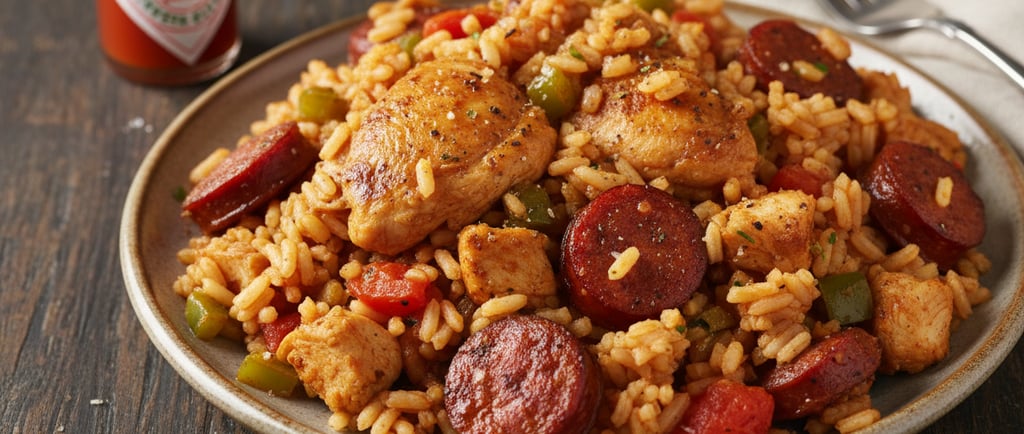
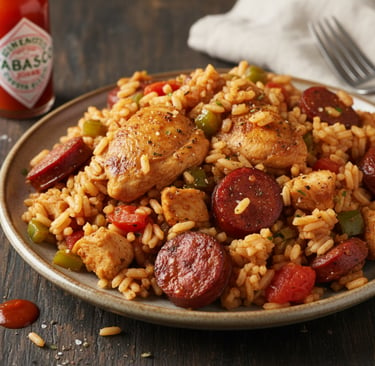
With Mardi Gras just around the corner, I thought I would dust off one of my old favorites to share. This version sausage and chicken jambalaya lands squarely in the Creole side of Louisiana fare, with the addition oof the tomatoes, but it is one of my favorites, and one that I have not made in a while. So grab yourself a plate, and enjoy!
COOKBOOKFEATURED POSTS
2/7/20267 min read
This post may contain affiliate links. As an Amazon Associate, I earn from qualifying purchases, which helps support the work here at Fire, Iron and Spice , as well as our homestead/farm‑building journey.
Meanwhile, back in the Bayou...
Creole sausage and chicken jambalaya has a way of sneaking up on you. It’s one of those dishes that looks humble in the pot—rice, vegetables, meat, nothing fancy—and then it hits you with layers of heat, smoke, tomato, and that unmistakable Louisiana swagger. I’ve cooked a lot of one‑pot meals over the years, but this one sits near the top of my personal favorites list. Maybe it’s the timing, with Mardi Gras right around the corner. Maybe it’s the memories tied to the recipe. Or maybe it’s just the kind of food that feels like a celebration even when you’re eating it on a quiet Tuesday night in New Mexico.
Whatever the reason, jambalaya has become one of those dishes I return to again and again, especially this Creole‑leaning version that a friend of mine from Louisiana shared with me back when we were working together in the oilfield up in North Dakota. Long days, brutal cold, and the kind of work that makes you appreciate a hot meal more than you ever thought possible. He’d talk about home—New Orleans, Lafayette, the food, the music, the humidity that wraps around you like a warm blanket—and I’d listen, half for the stories and half for the way he described the food. Every time he talked about Louisiana cooking, it made me want to go even more. I still haven’t made it there, but it’s high on my bucket list. One of these days I’ll walk through the French Quarter, eat my weight in gumbo and beignets, and finally see the place that inspired so many of the dishes I love.
Until then, I cook.
And this jambalaya is one of the closest things I have to a postcard from Louisiana.
The Creole Heart of This Jambalaya
There are two main branches of jambalaya—Cajun and Creole—and people from Louisiana will tell you the differences matter. They’re right. Cajun jambalaya is the brown one, the one that gets its color from deeply browned sausage and chicken and the fond scraped up from the bottom of the pot. No tomatoes. No tomato sauce. Just meat, vegetables, rice, and time.
Creole jambalaya, on the other hand, wears its red proudly. Tomatoes, tomato sauce, sometimes even a little tomato paste depending on who’s cooking. It’s a little saucier, a little brighter, and it carries that New Orleans influence—French, Spanish, Caribbean, African—all simmered together in one pot.
This recipe falls squarely into that Creole category. The reddish tint comes from the combination of fresh tomato, sofrito, and tomato sauce. The sofrito adds depth and a slow‑cooked sweetness, while the tomato sauce gives the rice that signature color and a silky texture. It’s not a heavy tomato flavor—this isn’t spaghetti sauce with rice—but it’s enough to shift the whole personality of the dish.
The Cajun version is fantastic in its own right, but this Creole style hits a different note. It’s festive. It’s bright. It feels like Mardi Gras in a pot.
Why This Dish Means Something to Me
Food is rarely just food. It’s memory, place, people, and the stories that get wrapped up in the process of cooking. This jambalaya carries a lot of that for me.
When I first learned this recipe, I was thousands of miles from Louisiana, standing in a cold North Dakota kitchen with a guy who missed home so much you could hear it in his voice. He’d talk about Mardi Gras like it was a season of the year—something you feel in your bones, not just a date on the calendar. He’d talk about the smell of sausage frying in cast iron, the sound of a whole house full of people laughing and eating, the way a pot of jambalaya can feed a crowd without breaking a sweat.
I didn’t grow up with that. But I understood it.
There’s something grounding about a dish like this. Something that feels like it belongs to the people who cook it. And even though I’ve never set foot in Louisiana, cooking this jambalaya makes me feel connected to it in a small way. It’s a reminder that food travels. Recipes travel. Stories travel. And sometimes they land in your kitchen at exactly the right time.
The Backbone of the Flavor
Creole jambalaya is built on a few non‑negotiables, and this recipe hits all of them.
The Trinity Onion, bell pepper, and celery—the holy trinity of Louisiana cooking. You sauté them until they soften and start to caramelize, and that’s where the flavor begins. It’s simple, but it’s the kind of simple that makes everything else work.
The Meats Andouille or Louisiana hot sausage brings the smoke and spice. Chicken thighs bring richness. Chicken breasts bring lean protein and texture. Browning them separately builds layers of flavor in the pot.
The Tomato Base Fresh tomato, sofrito, and tomato sauce give this dish its Creole identity. They melt into the rice as it cooks, turning everything a deep, warm red.
The Heat Chipotle Tabasco for smoke. Regular Tabasco for brightness. The combination hits the back of your throat in the best way—not overwhelming, just enough to remind you that Louisiana food doesn’t shy away from flavor.
The Rice Whole‑grain white rice holds up beautifully here. It stays firm, absorbs flavor like a sponge, and doesn’t turn mushy even after a long simmer.
All of these pieces come together in a way that feels effortless once you’ve done it a few times. It’s the kind of recipe that rewards patience and attention, but it doesn’t demand perfection. It’s forgiving. It’s flexible. It’s real home cooking.
The Rhythm of the Pot
Even though I’m not including the step‑by‑step instructions here (they are included in the recipe card below), the rhythm of this dish is worth talking about. Jambalaya has a flow to it. You brown the meats, build the base, toast the rice, add the liquid, and let time do the rest. It’s a one‑pot meal, but it doesn’t feel rushed. It feels like something you settle into.
There’s a moment, right after you add the rice and stir it into the tomato‑vegetable mixture, when the whole pot smells like the beginning of something great. The rice toasts just a little, soaking up the oil and spices. Then the stock goes in, the sausage and chicken return, and the whole thing transforms into a simmering, bubbling, aromatic pot of Louisiana comfort.
When the lid goes on, you wait. You don’t stir. You don’t fuss. You let the rice absorb the liquid and the flavors meld. And when you finally lift the lid, the smell alone is worth the effort.
Why This Jambalaya Belongs on Your Mardi Gras Table
Mardi Gras is about celebration—color, music, food, and the joy of gathering. Even if you’re nowhere near New Orleans, cooking something that carries that spirit is a way to join in from afar.
This jambalaya fits the moment perfectly. It’s hearty enough to feed a crowd, bold enough to feel festive, and simple enough that you can make it on a weeknight without feeling like you’ve taken on a project. It’s the kind of dish that invites people to grab a bowl, sit down, and stay awhile.
And for me, it’s a reminder that you don’t have to be in Louisiana to appreciate Louisiana cooking. You don’t have to have grown up with Mardi Gras to honor it. You just have to cook with intention, respect the traditions, and enjoy the process.
A Dish That Travels Well
One of the things I love most about jambalaya is how well it fits into the Fire, Iron and Spice philosophy. It’s practical, it’s flavorful, and it’s built on ingredients that earn their keep. It’s the kind of dish you can make in a cast‑iron pot over a stove, over a fire, or in a cramped kitchen after a long day. It doesn’t ask for much, but it gives a lot.
It also reheats beautifully, which makes it perfect for meal prep, leftovers, or feeding a family over a couple of days. The flavors deepen overnight, and the rice holds its structure without turning mushy. It’s one of those rare dishes that might actually taste better the next day.
The Personal Side of It
Every time I make this jambalaya, I think about that friend from Louisiana. I think about the stories he told, the way he described home, and the pride he had in the food he grew up with. I think about the cold North Dakota nights when a pot of something hot and spicy was the best thing you could ask for.
And I think about how food connects us to places we haven’t been yet. Louisiana is still on my list. One day I’ll get there. I’ll walk into a real Creole kitchen, eat a bowl of jambalaya made by someone who’s been cooking it their whole life, and finally taste the dish in its natural habitat.
Until then, this recipe keeps me connected to that dream. It keeps me connected to the people who shared it with me. And it keeps me grounded in the kind of cooking that feels honest and lived‑in.
Final Thoughts
Creole sausage and chicken jambalaya is more than a recipe—it’s a story, a memory, and a celebration all wrapped into one pot. It’s a dish that honors Mardi Gras, honors the people who taught it to me, and honors the traditions of a place I hope to visit someday.
If you’re looking for something bold, comforting, and full of Louisiana soul, this jambalaya belongs in your kitchen. It’s one of my favorites for a reason.
Makes 7 - 8 servings (12 to 14 oz)
Contact
Get in touch for questions or stories
hello@fireironandspice.com
© 2025.Vardar, LLC. All Rights Reserved.
A SkaldLight Creative Production.
LEGAL
Join Us
Get fresh recipes and homestead stories just for you!