
Cedar Plank Salmon with a Maple and Soy Glaze
With the Seahawk’s Super Bowl win just a couple days ago, I couldn’t miss the opportunity to present this delicious salmon recipe, as my tip of the hat to them and the fans. Seattle has always had a pull on me—the coastline, the markets, the weather that never quite makes up its mind. And if there’s one recipe that feels iconically Seattle from top to bottom, it’s salmon cooked slow over cedar with a glaze built on maple and soy. It’s the kind of dish that tastes like the Pacific Northwest even if you’re cooking it hundreds of miles away.
COOKBOOKFEATURED POSTS
2/11/20264 min read
This post may contain affiliate links. As an Amazon Associate, I earn from qualifying purchases, which helps support the work here at Fire, Iron and Spice , as well as our homestead/farm‑building journey.
Cedar‑Plank Salmon and Why It’s Pure Seattle
Seattle cooking has this way of being bold without being loud. Clean flavors, simple ingredients, nothing fussy. Just good food treated with respect. Cedar‑plank salmon fits right into that tradition. The moment that plank hits the grill and starts to crackle, you get that soft, sweet smoke that feels like it drifted straight off the Puget Sound. It’s not heavy or aggressive—just enough to wrap around the salmon and remind you of wet forests, cold mornings, and the kind of coastline that sticks with you.
The cedar does more than add flavor. It slows everything down. Instead of blasting the fish with direct heat, the plank protects it, letting it cook gently and evenly. The edges char, the wood smolders, and the salmon stays tender all the way through. It’s a method that feels old‑school in the best way—simple, patient, and rooted in place.
Maple and Soy: A Glaze That Belongs on the Grill
The glaze on this salmon is one of those combinations that just works. Maple syrup brings a deep, woodsy sweetness that melts right into the cedar’s natural aroma. Soy sauce adds the savory backbone that keeps everything grounded. Brown sugar helps the glaze tighten and caramelize. Ginger and garlic wake it all up with warmth and brightness. It is just flat tasty, and makes my mouth water every time, Tess's as well - the salmon, I mean, not the glaze... whenever there is salmon cooking i can always count on her pacing around the grill, nose in the air and sniffing like she's hyperventilating.
As the salmon cooks, while Tess and I drool, the glaze clings and sets, forming a thin, glossy coat that catches the smoke and heat. It doesn’t get sticky or heavy—it stays clean and balanced. Every bite ends up layered: sweet, salty, smoky. It’s the kind of flavor profile that feels like it was made for the grill.
Pike Place Market and the Spirit Behind the Dish
Every time I make cedar‑plank salmon, I think about Pike Place Market. I think about the fishmongers tossing whole salmon through the air like it’s nothing, the crowd gathering, the laughter, the rhythm of it all. I’ve stood there more times than I can count, watching those guys launch fish with the kind of confidence that only comes from doing something a thousand times. It never gets old.
There’s something about that moment—the shouts, the slap of a fish landing in waiting hands, the whole crowd leaning in—that captures the heart of Seattle food culture. It’s lively, it’s communal, and it’s rooted in tradition. Cooking salmon on a cedar plank brings a little of that energy home. It’s not just about the fish. It’s about the story behind it.
What Cedar Brings to the Grill
Cedar‑plank cooking is one of those techniques that makes you slow down. You get yourself some good quality cedar planks, like these. soak the plank (for around 45 mins to an hour for the thinner planks, longer if they are thicker), heat it on the grill, and let the wood do its thing. The smoke is gentle, almost aromatic, and it seasons the salmon without ever overpowering it. The plank keeps the heat steady, so the fish cooks evenly and stays moist. And because the salmon never touches the grates, you get that perfect flaky texture every time.
It’s a method that rewards patience. You can’t rush it. You can’t crank the heat and hope for the best. You let the cedar warm, let the smoke rise, and let the glaze settle. When you lift the lid and see that deep amber sheen on top, you know you’ve done it right.
A Dish That Feels Like Home—Wherever Home Is
This recipe is the kind of thing you make when you want something that tastes like it took more effort than it actually did. It’s approachable and down‑to‑earth, but still feels special—like something you’d serve to people you care about. And even though it’s simple, it carries a sense of place. It tastes like cedar smoke and cold air and the kind of coastline that leaves a mark on you.
That’s why it felt right to make this in honor of Seattle’s big win. Not because it’s flashy or complicated, but because it’s iconic. It’s the dish that shows up at backyard grills, campsite fires, and family tables all across the Pacific Northwest. It’s the dish that reminds you of Pike Place and wild salmon flying through the air. It’s the dish that tastes like the region itself—clean, bold, and honest.
Bringing It All Together
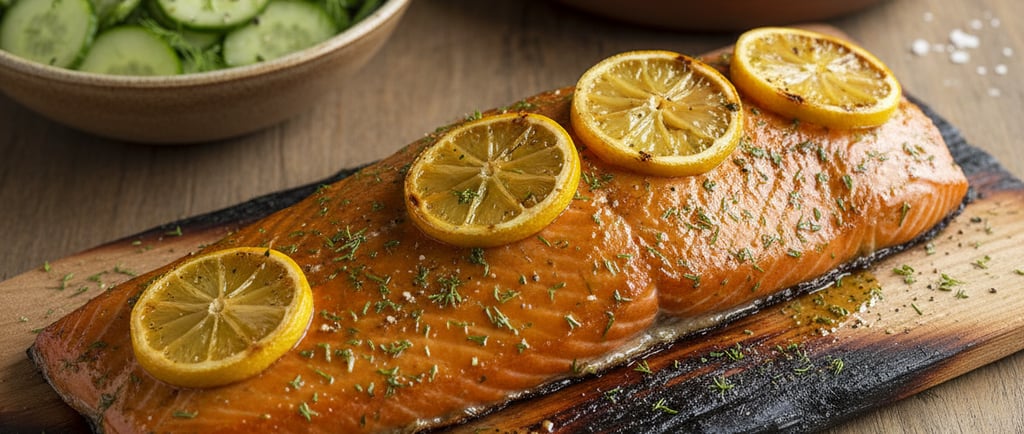
When the salmon comes off the grill, the glaze set and the cedar charred just enough, it feels like a small celebration all on its own. A plate of something simple, rooted, and full of flavor. A dish that carries its own story, shaped by smoke and wood and the quiet moments spent tending the fire.
This cedar‑plank salmon is Seattle on a plate. It’s a nod to the city, the coastline, the market, and the traditions that make the Pacific Northwest feel so alive. And it’s a reminder that sometimes the best dishes are the ones that don’t try too hard—they just let the fire, the wood, and the ingredients speak for themselves.
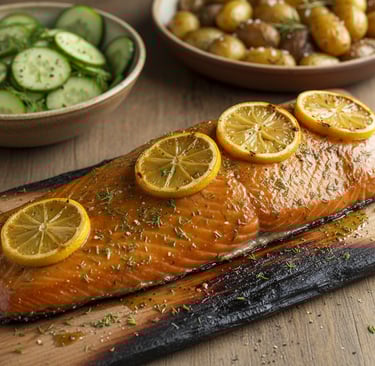
This dish is unbelievably tasty and I like to wolf mine down with something crisp and what my mom would call bright - a cold cucumber‑dill salad or it goes fantastic with grilled asparagus and maybe some roasted fingerling potatoes. But honestly, this salmon can stand on its own. It’s that good, and it’s that rooted in the kind of cooking that feels like home—wherever you’re cooking it.
Contact
Get in touch for questions or stories
hello@fireironandspice.com
© 2025.Vardar, LLC. All Rights Reserved.
A SkaldLight Creative Production.
LEGAL
Join Us
Subscribe to our page for new homestead updates and recipes, as well as my free gift to you: a downloadable PDF of "My 5 Favorite Sauces for the Grill"

